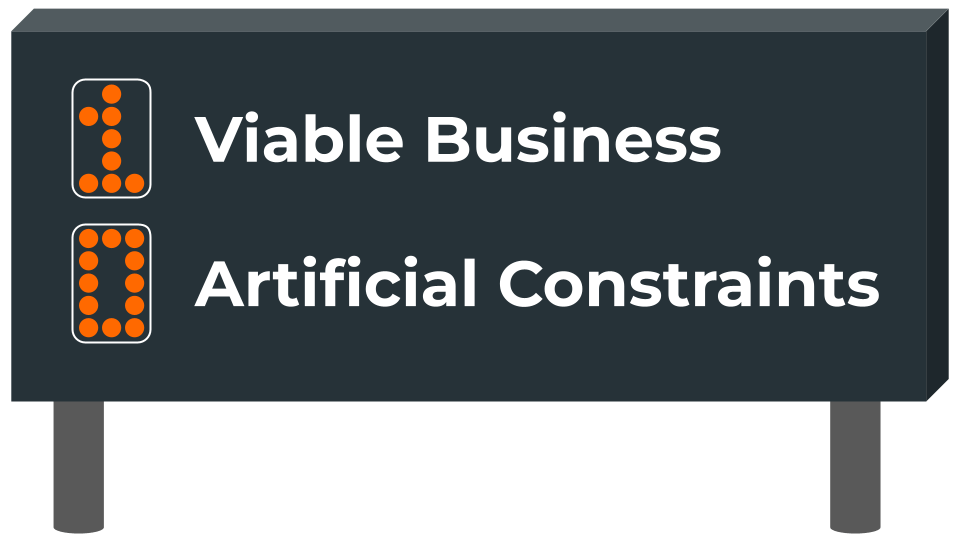
We’ve heard it countless times before…
You can’t build a business around a product that is truly free. You need to impose some artificial constraints to make money.
False. Today is reelyActive’s anniversary, and looking back at our thirteenth year, we can say with confidence that we have indeed operated a viable business based solely on the open source technologies we steward, and on which we proudly impose zero artificial constraints.
If you make useful technology available with zero constraints, won’t other businesses simply take it and use it?
Yes, and we encourage them to do so! The technologies we develop are foundational, which means that their utility increases with adoption. It is in everyone’s interest, including our own, that they be adopted and used extensively, regardless of whether there’s a contribution in return.
So why would anyone pay for something that is truly free to use?
Good question. And we have a good answer: for many users, the value is in the continued existence and continuous evolution of the technology—and that’s worth paying for! Plainly put, perennity is paramount. If your business is betting its future on digital transformation with an Internet of Things (IoT) technology stack, you don’t want to be gambling with ephemeral platforms and products. Supporting established open source technologies is arguably the most efficient way for a business to secure long-term freedom to operate.
If the zero-artificial-constraints open source business model actually works, why don’t we see more of it?
Another good question. It’s actually something we think about a lot. Why was it such a challenge for us to build a viable business stewarding open source technologies with zero artificial constraints? Here are some thoughts, each of which might merit a blog post of its own!
- Do business schools even teach the open source business model? You know, people buy what they know…
- Do engineering and technology schools even teach the open source development/stewardship model? You know, people produce what they know…
- Does the startup ecosystem (especially early-stage investing) in any way support—or even appreciate the merits of—this model? 🤷
From our own experience, the answers are overwhelmingly no, no and no. But we’re optimistic that this can change! And we’d argue that the best way to do this is to continue to prove the success of this model while proudly singing its praises. We invite you to join us!
 The reelyActive Blogs